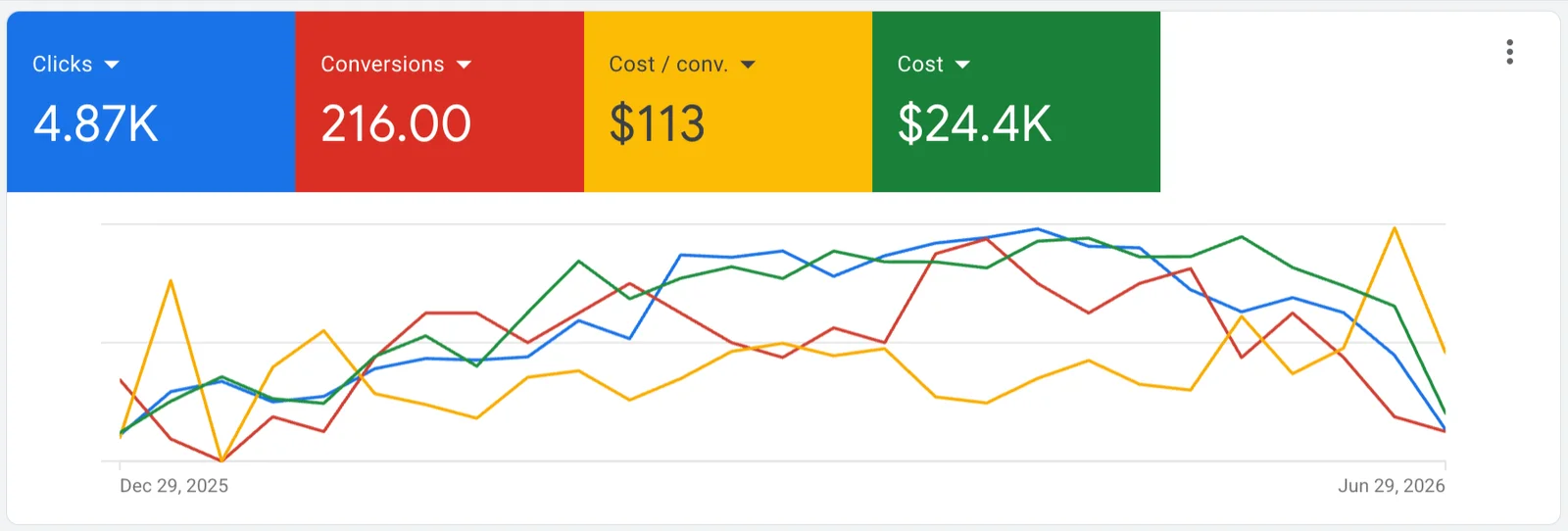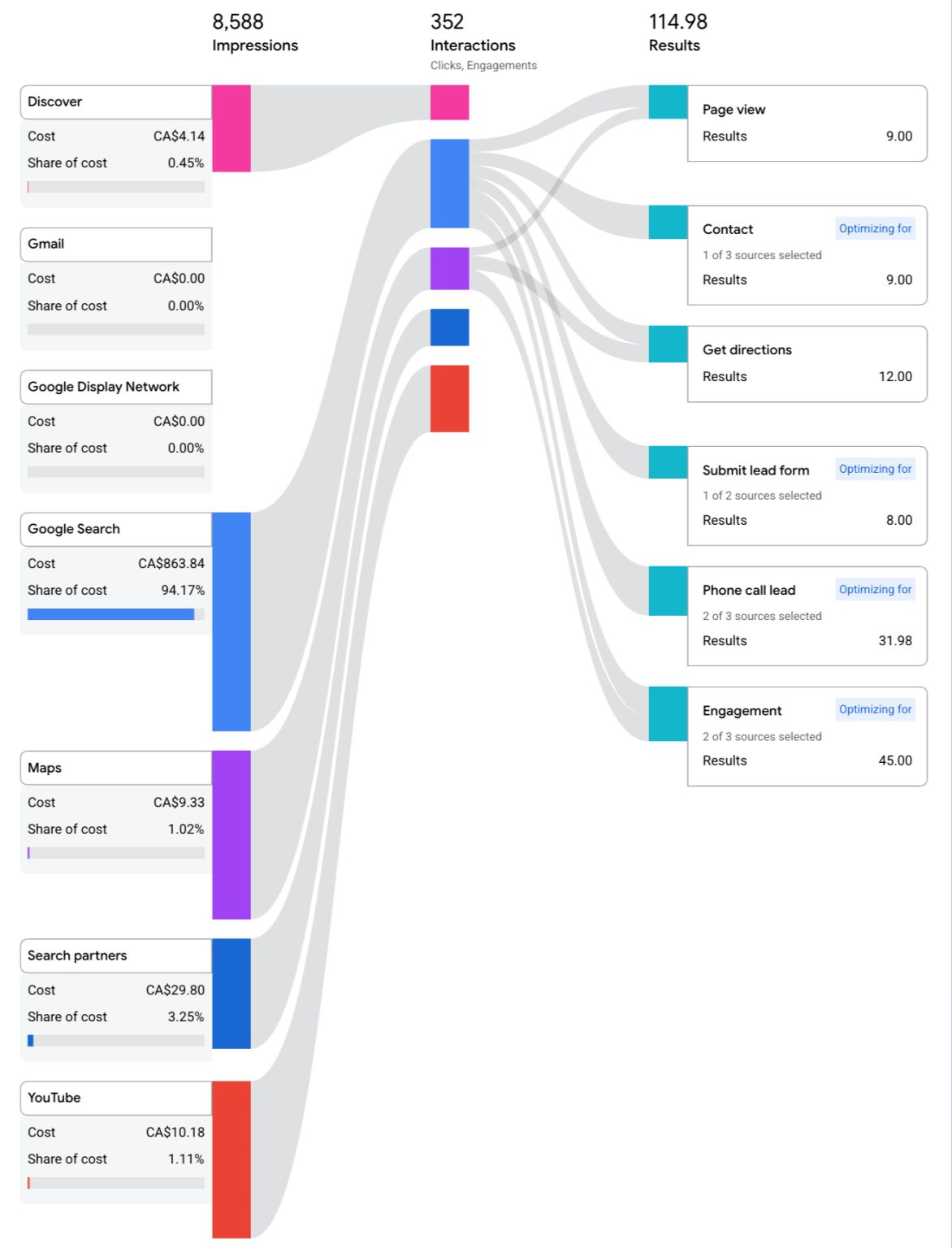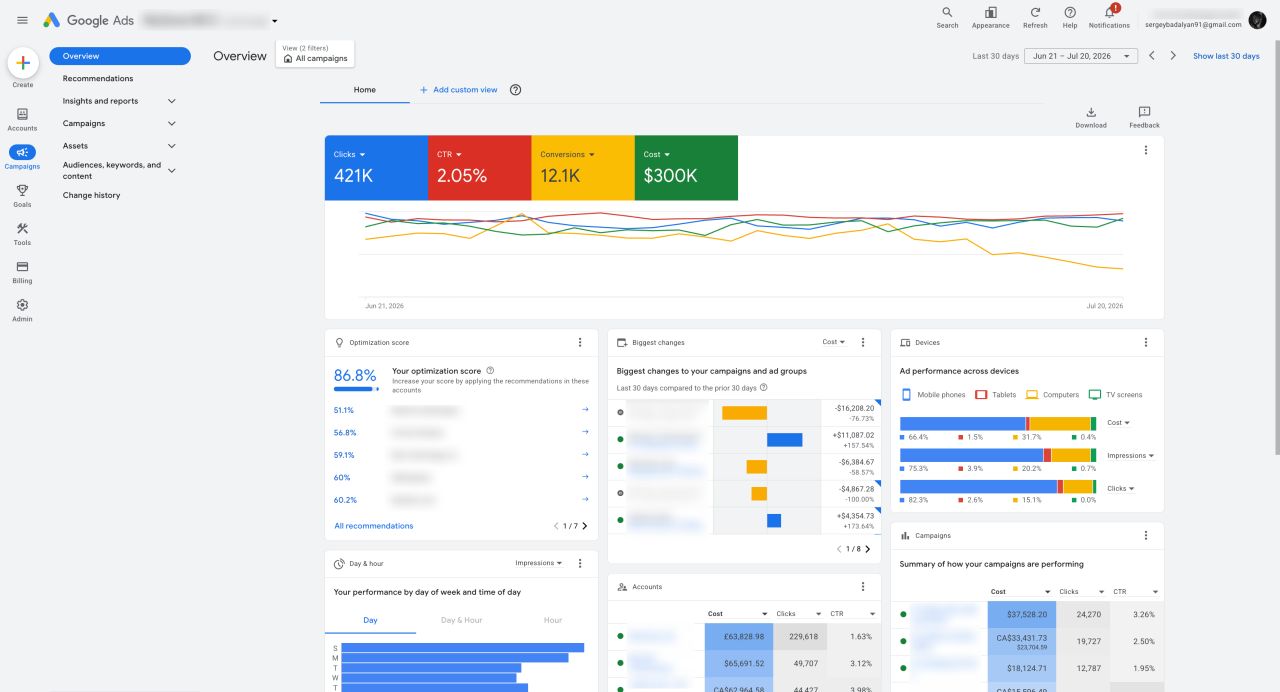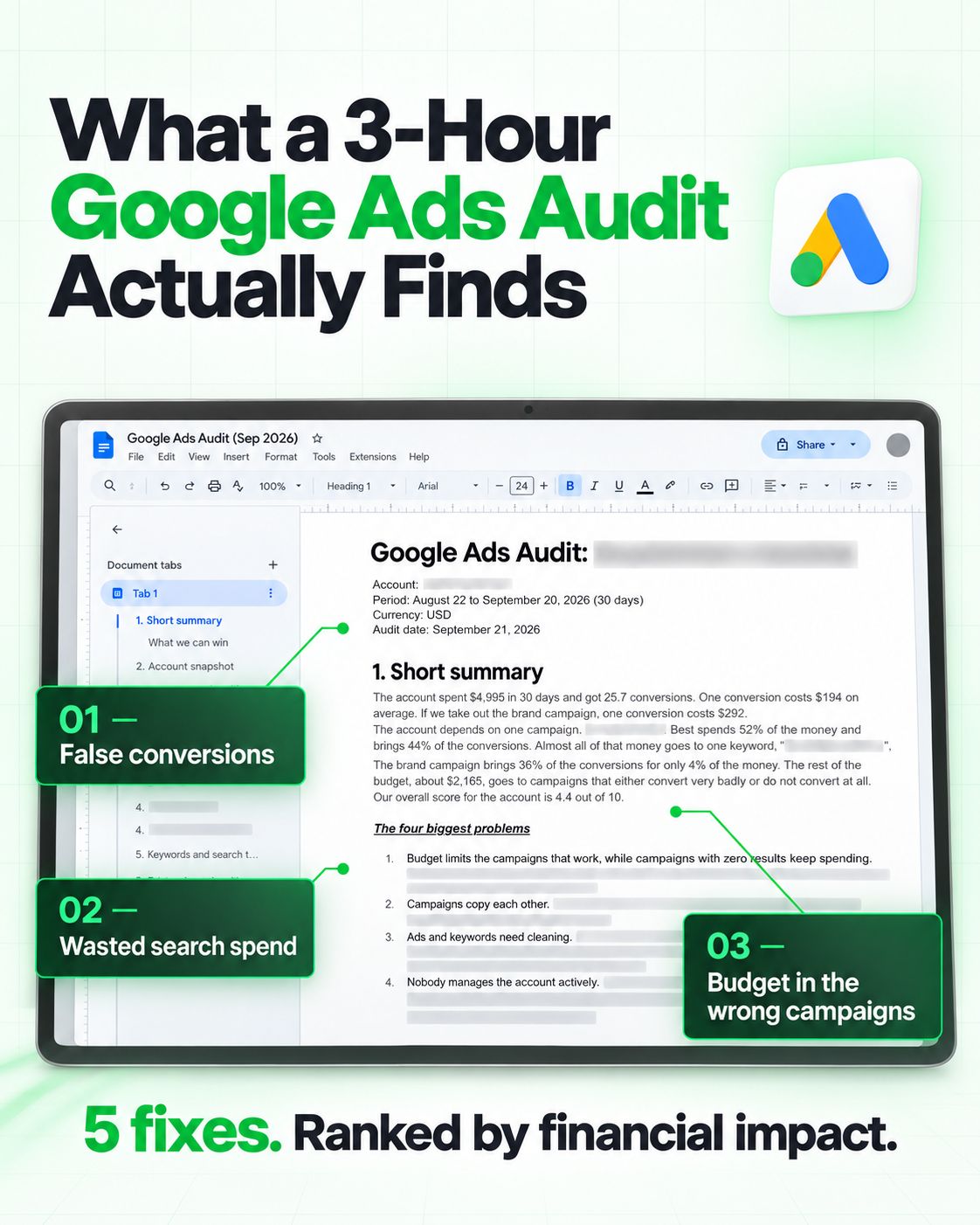
People sometimes ask what they actually get when they pay me for an ad account audit, so let me open the box on a recent one. Client details removed, process intact.
Hour one went into conversion tracking. I traced every conversion action to its source and found the account was counting a thank-you page that users could reach directly from Google. A meaningful share of reported conversions had never seen an ad. Every optimization decision made on top of that number for months was built on sand.
Hour two went into the search terms report and budget map. Broad match had drifted into queries from a neighboring industry, and the biggest budget sat on the campaign with the oldest history rather than the best economics, which is the single most common pattern I see in unmanaged accounts.
Hour three produced the deliverable: a prioritized list of what to fix, in what order, and what each fix is roughly worth in monthly savings. Not forty generic recommendations, but five that matter, ranked by money.
The client can hand that list to me or to anyone else. Either way, they finally know what's true in their own account, and that's the real product.
The five checks behind every audit
The three hours above follow the same order every time, because the same five checks expose most problems within the first hour.
- Conversion tracking. What is actually being counted? In a large share of accounts, “conversions” include page views, button clicks or duplicate events. If measurement is broken, every other number in the account is fiction.
- The search terms report. Not the keywords you chose, but the real queries the money went to. This is where broad match quietly spends hundreds of dollars a month on searches that have nothing to do with the business.
- Change history. Is someone actually managing this account, or did it last see a human three months ago? Constant chaotic changes are as revealing as silence.
- Budget distribution against results. Almost every unmanaged account shows the same pattern: the biggest budget sits on the campaign with the longest history rather than the best numbers.
- What happens after the click. Landing page, forms, speed, message match. Half of all “advertising problems” live here, entirely outside the ad account.
Notice what is not in the top five: ad copy, bidding strategy, audiences. They matter, but they are never the first leak.
“I asked him to audit my campaign structure to find leaking opportunities holding back our conversion rates. He responded fast and delivered comprehensively — went deep, no surface-level stuff. I now trust him to take over the account.”
— Rare vinyl store, UK, review on Upwork
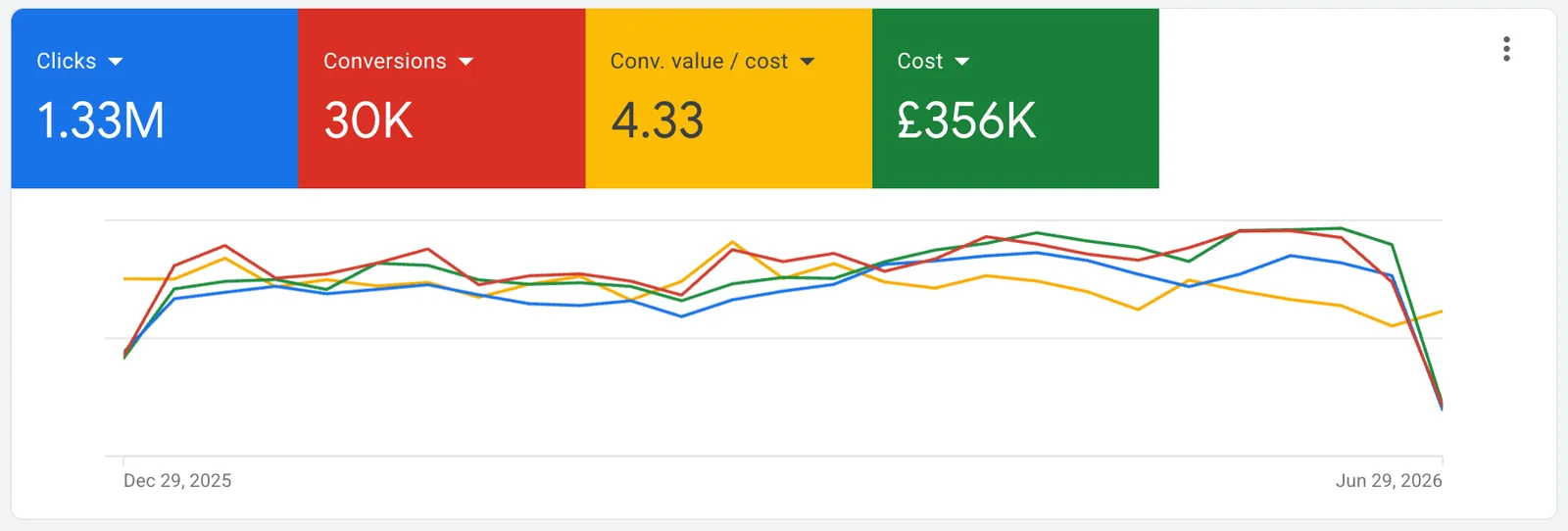
That audit became the vinyl store account: £1.54M in tracked revenue at ROAS 4.33 over the following six months. The format, timeline and what you receive are on the audit page.