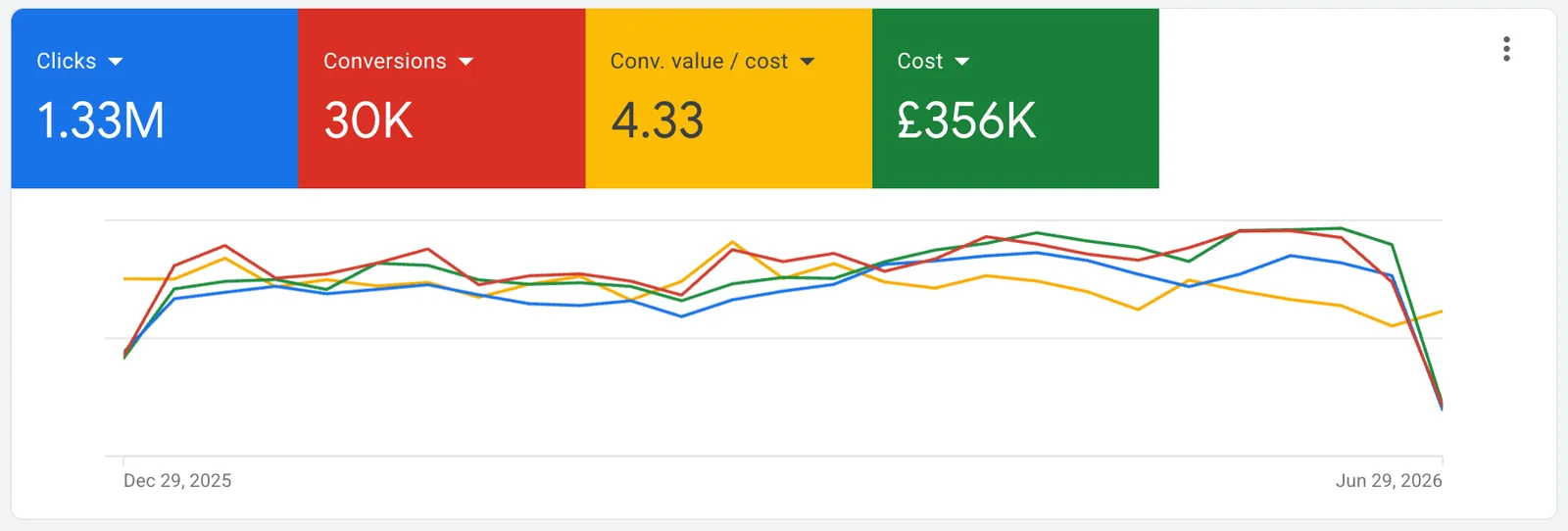
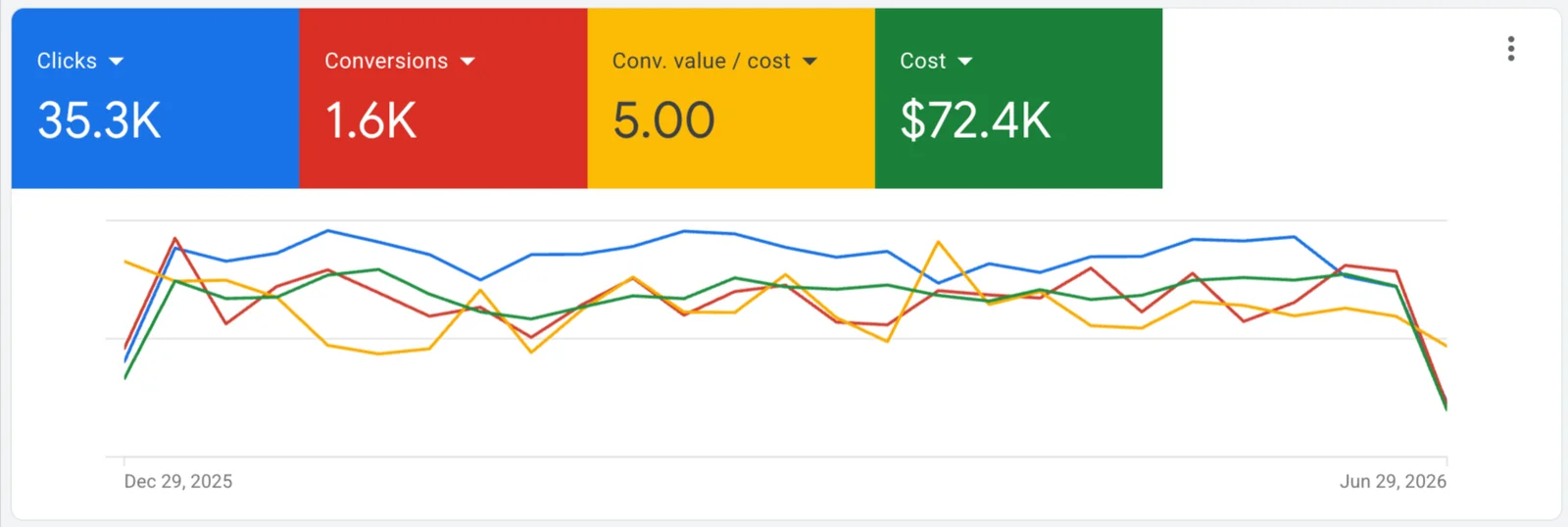
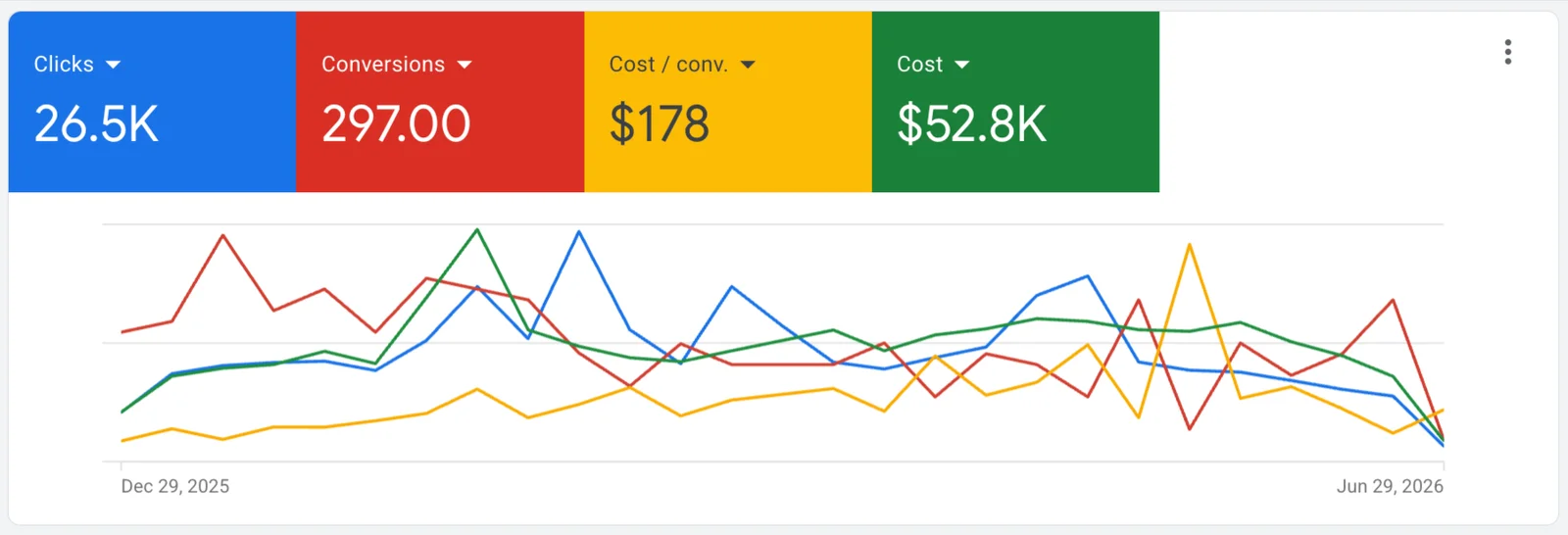
Remarketing works because the audience has already told you something: they looked at a product, started a form, read the pricing page. The job is to use that signal precisely, not to follow everyone around the internet for ninety days.
Audiences by behaviour and recency
Cart abandoners in the last 7 days are a different audience from people who read one blog post a month ago, and they deserve a different ad, a different bid and a different window. I build audiences on what people did and how recently, on Google (GA4 audiences, Google Ads lists) and Meta (Pixel and Conversions API events, engagement), and keep the windows short where intent decays fast.
Dynamic product ads for stores
For e-commerce, catalog-based remarketing shows each person the products they actually viewed, on Meta and through Google's dynamic formats. In the vinyl store, catalog ads bringing back browsers were a core part of a Meta channel that returned about £3.50 per £1 from its first quarter.
Exclusions, so you do not pay twice
People who already bought, already enquired, or already booked get excluded, or moved into a separate audience with a different message such as reorders or upsell. Without exclusions, remarketing happily shows ads to your own customers and takes credit for their next purchase.
Frequency and fatigue
Being shown the same ad thirty times is not persuasion. Frequency caps on Google, creative rotation on Meta, and audience sizes checked against budget so that a small list is not hammered.
Measured on incremental results
Remarketing reports look spectacular by design: it targets people close to buying, so it claims a share of sales that would have happened anyway. I judge it on what changes in total sales or leads when it is on versus off, and on the cost of the audience, not on the ROAS in its own report. This only works when tracking counts each sale once.
Where it fits
Remarketing is a layer, not a strategy. It needs traffic from Search, Shopping or Meta prospecting to work with, and it is included in every account I run rather than sold separately.