Shopping ads are the product photo, price and store name that appear when someone searches for a product. Performance Max (PMax) is Google's automated campaign that extends that across Search, YouTube, Display and Gmail. Both run on your product feed, which is why the feed is where the work starts.
The feed and Merchant Center
Google can only sell what it understands. Titles that lead with what people search for (brand, product type, key attribute) rather than internal SKU names; correct product categories; GTINs where they exist; prices and availability that match the site so items are not disapproved; custom labels for margin, price band, seasonality and bestseller status so campaigns can be split by what matters to the business. For stores with unusual catalogs, such as the vinyl store where most items are single copies and stock turns over constantly, keeping the feed accurate is half the job.
Structure by margin, not by Google's default
A single Shopping or PMax campaign with the whole catalog lets Google spend where conversions are easiest, which is usually your cheapest, lowest-margin products and your own brand name. I split campaigns and asset groups by margin and category, set different return targets for each, and keep brand searches separate so the “ROAS” of generic campaigns is real. Low-margin bestsellers get a tight target; high-margin or high-ticket categories get room to grow.
Standard Shopping or Performance Max?
Usually both. Standard Shopping gives control and clean data: you see search terms, you set bids by product group. PMax gives reach and automation, and tends to win once it has enough conversion data, but it hides where the money goes. The typical path: establish the account on Shopping and Search, then layer PMax on top with brand exclusions and a clear return target, and watch whether it adds sales or just takes credit for the ones Shopping was already getting.
Scaling without losing the return
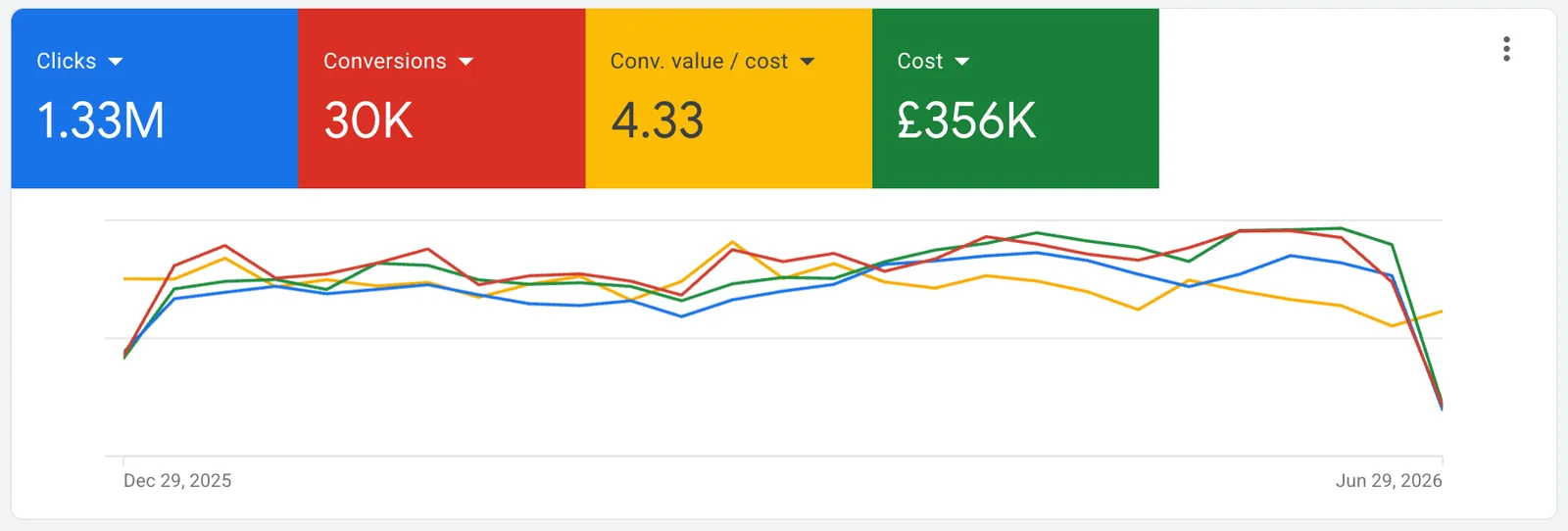
Many stores can show a strong ROAS at $5,000 a month. The question is whether it survives at $50,000. The vinyl store went to roughly £60,000 a month while holding ROAS above 4 for six consecutive months, and the way to do that is boring: raise budgets and targets in steps of 15–20%, give the algorithm a week or two to settle at each level, and watch the marginal return, not the average. When the marginal return drops below the margin, stop.
Tracking that Shopping depends on
Shopping and PMax bid on value. If orders arrive without revenue, or arrive twice, the bidding learns nonsense. Purchase tracking with correct values, one count per order and enhanced conversions is set up and tested before any Shopping budget goes live. More on conversion tracking.
Who this is for
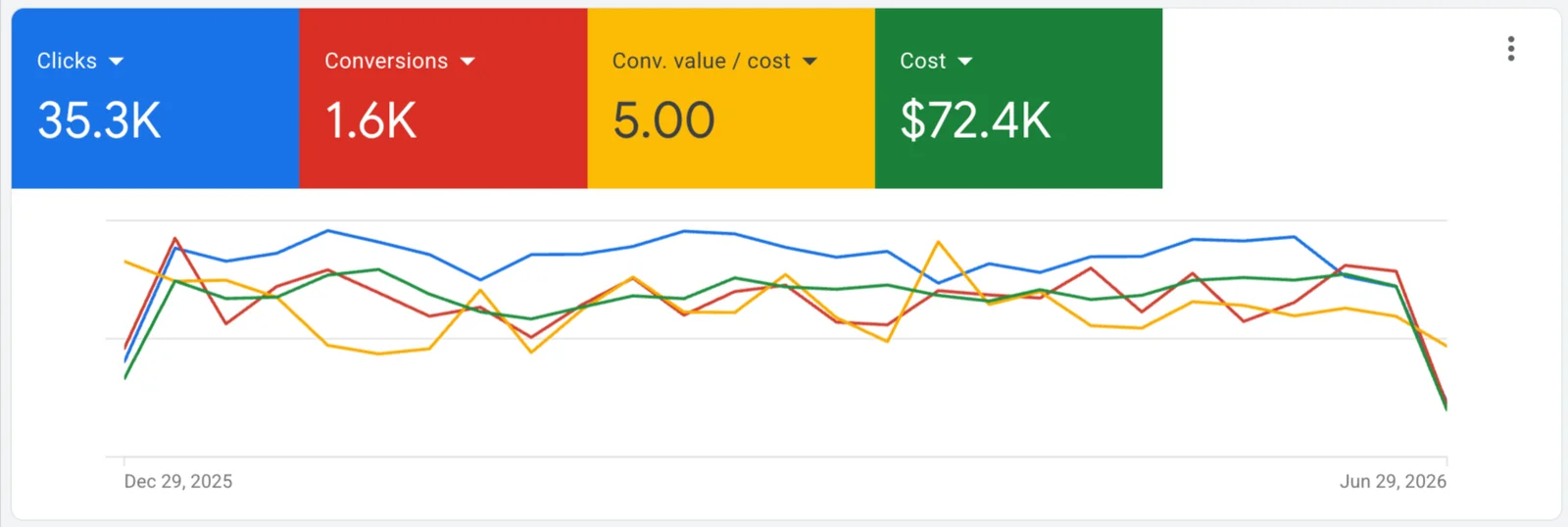
Online stores with a working product, a margin that can absorb paid traffic, and usually from around $3,000 a month in ad spend. Shopify, WooCommerce, Magento, custom platforms: the feed logic is the same. If your catalog is unusual (one-of-a-kind items, regulated products, B2B pricing), that is a reason to talk, not a reason it will not work: the CPAP store sells $800+ medical devices and held ROAS 5.0 for six months.