1. Strategy call and audit · day 1–2
We start with a call about your business, not about ads: what you sell, to whom, at what margin, and what a sale or a lead is worth to you. If you already run an account, I go through it before the call: what is being tracked, where the budget actually goes, which campaigns and search terms pay and which only spend.
You get: a written summary of what I found and the questions that need answering before anything is planned. If you only want the audit, it can stop here: see Google Ads audit.
2. Media plan and forecast · day 3–5
This is the step most agencies skip. Based on your numbers and the market, I put together a plan: which platforms, which campaign types, how much budget, and what to expect from each in clicks, conversions, cost per result and return. The forecast is a range, not a promise, but it is grounded in real benchmarks and your own data where it exists.
You get: a media plan with a forecast, and a flat fee for the work. You decide with the numbers in hand. If the math does not work for your margins, I say so here, before any spend.
3. Build and launch · day 5–7
Tracking goes in first: Google Ads conversions, GA4, Tag Manager, Meta Pixel and Conversions API, consent handling. Only when a test purchase or test lead shows up correctly in the reports do campaigns get built. Then: account structure, keywords and negatives, audiences, product feed, ads and creatives, landing page checks.
You get: a working account you own, with every conversion measured, and a note on what is live and what to expect in the first weeks. More on why tracking comes first.
4. Ongoing optimization · weekly
The first 6–8 weeks are about gathering data and cutting waste: search terms that spend without converting, audiences that click without buying, products or ads that under-perform. After that it is about scaling what works in steps rather than jumps, so the account has time to adjust at each level. On Meta, this is where continuous creative testing lives.
You get: a short weekly update on what changed and why, and the reasoning behind every budget move.
5. Reporting and scaling · monthly
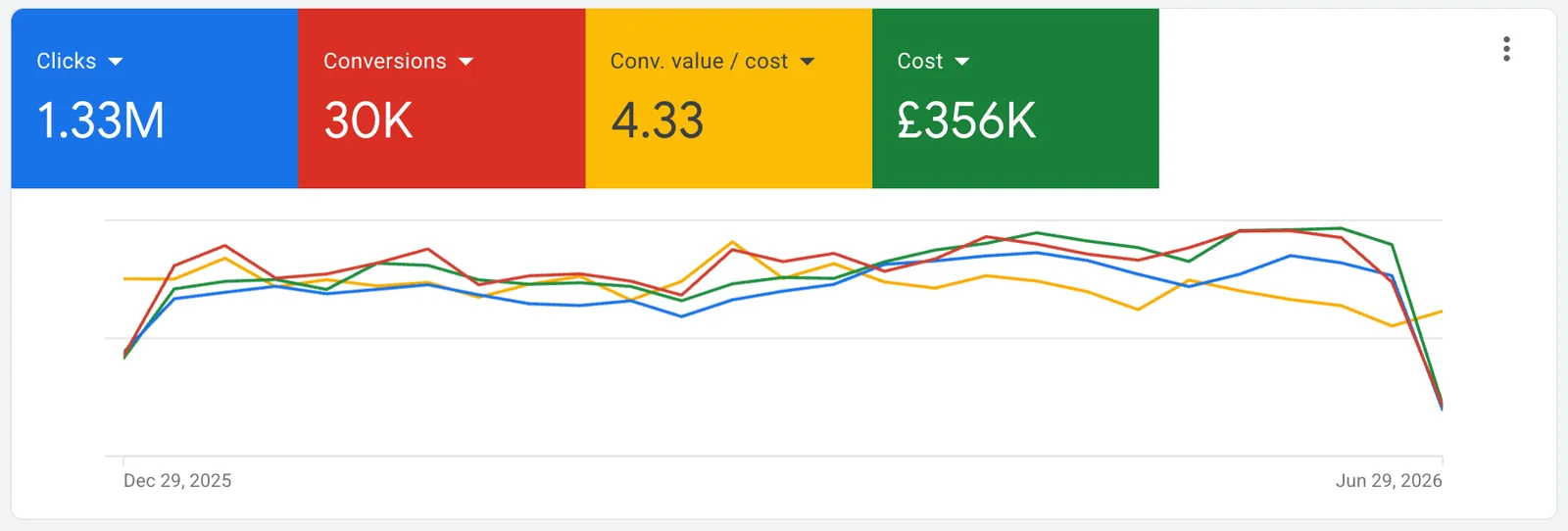
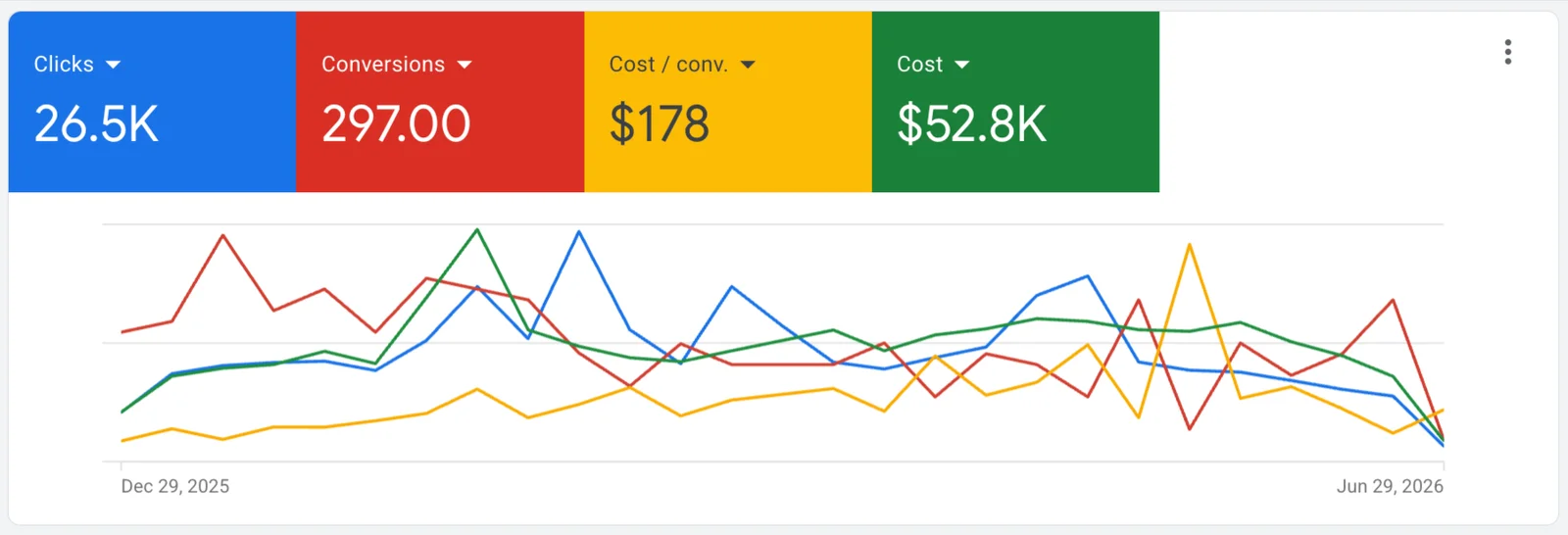
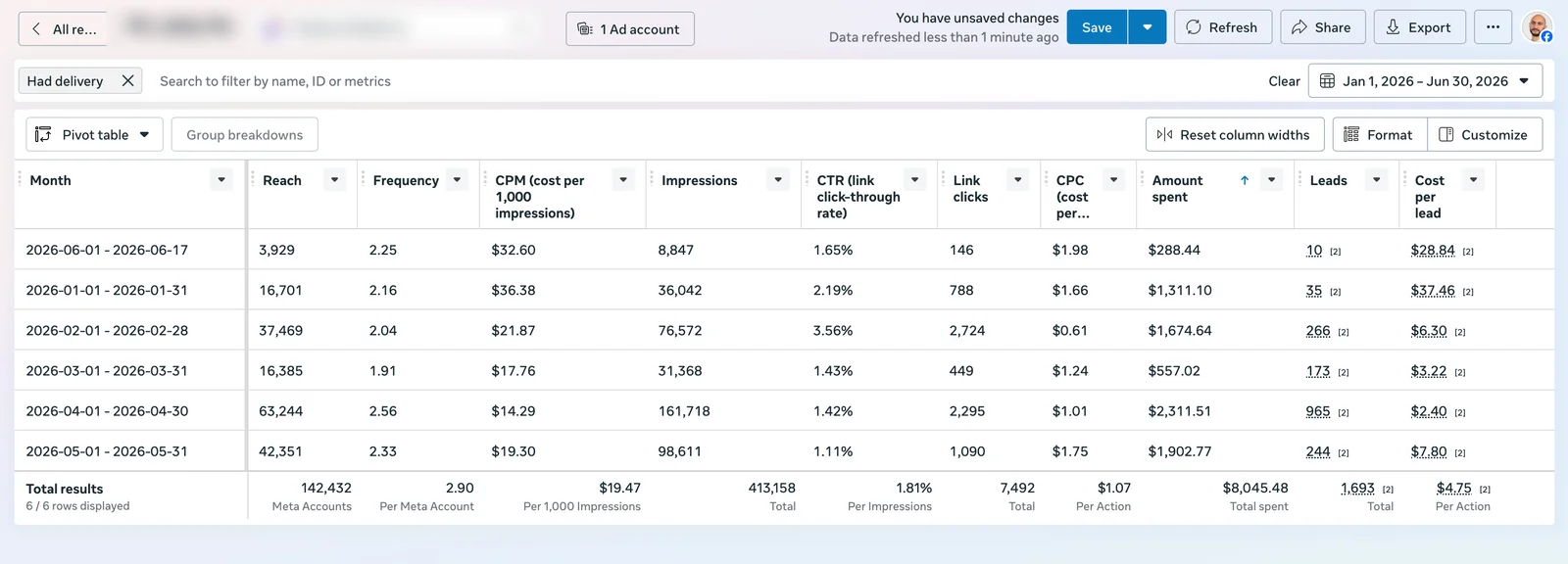
Once a month you get a report built around leads or sales, cost per result and return, compared to the forecast and the previous month. There is also a live dashboard you can open whenever you want. Based on the numbers we decide together where to add budget, where to hold and what to test next.
You get: a monthly report, a dashboard, and a plan for the next month.
What stays constant
- The person you hire is the person in the account. No account managers, no juniors. About me.
- You own everything. Ad account, data, creatives, dashboards. If we stop, it all stays with you.
- Flat fee, not a percentage of spend. So raising your budget is a decision about your results, not my income. Pricing.
- Honest numbers. If something is not working, you hear it from me first, with a proposal for what to do about it.
“Sergei was great! Methodical, responsive, and explained the things I didn't understand (there were many!). I would definitely hire him again if I needed more work done in this area.”
— Airshow, Canada, review on Upwork