Short version: I run Google Ads for businesses that measure success in revenue or qualified leads, not clicks. Before anything launches you get a media plan with a forecast, and if the math doesn't work for your margins, I'll tell you before we start.
What I actually run
- Search campaigns that catch people already looking for what you sell, structured so budget follows intent and margin, not keyword volume.
- Shopping and Performance Max for online stores: product feed, Merchant Center, campaign structure by category and margin, scaling in steps so ROAS survives the growth.
- Lead generation for B2B and service businesses: tight geographic and intent targeting, lead tracking that distinguishes a real enquiry from a form spam, cost per lead measured against what a customer is worth.
- YouTube to build demand where search volume alone is not enough.
- Remarketing to bring back visitors who did not buy or enquire the first time.
- Conversion tracking and GA4 / Google Tag Manager setup, because every other decision depends on the revenue number being right. This is always the first thing I check in an account.
Who this is for
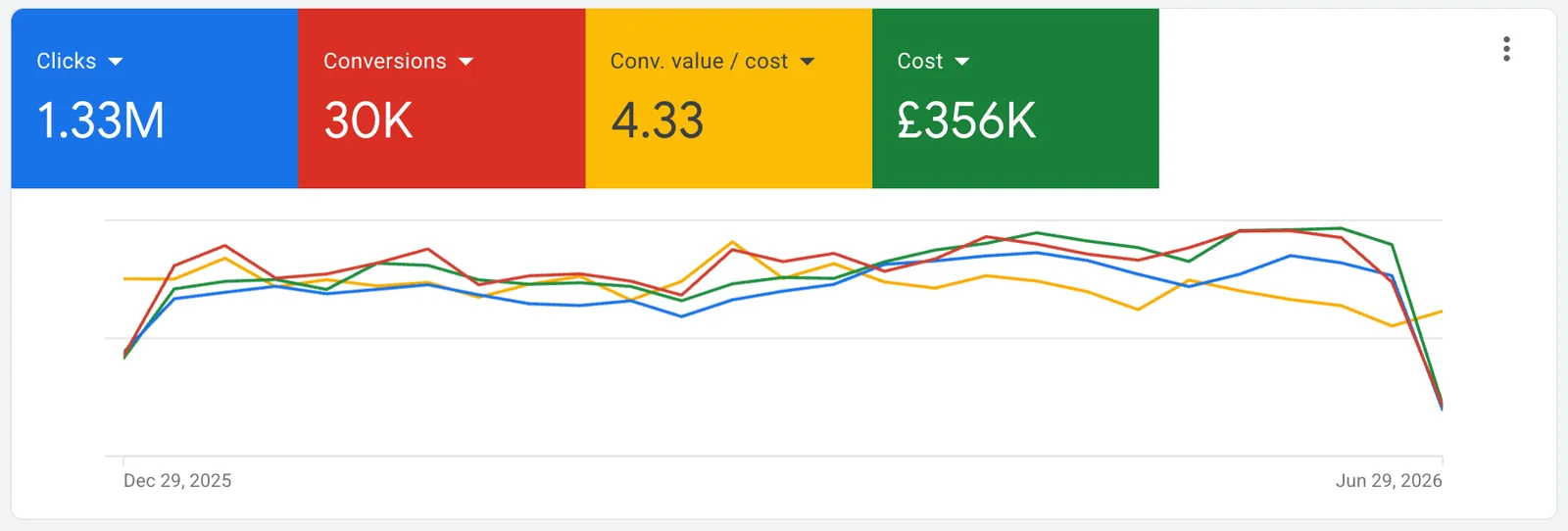
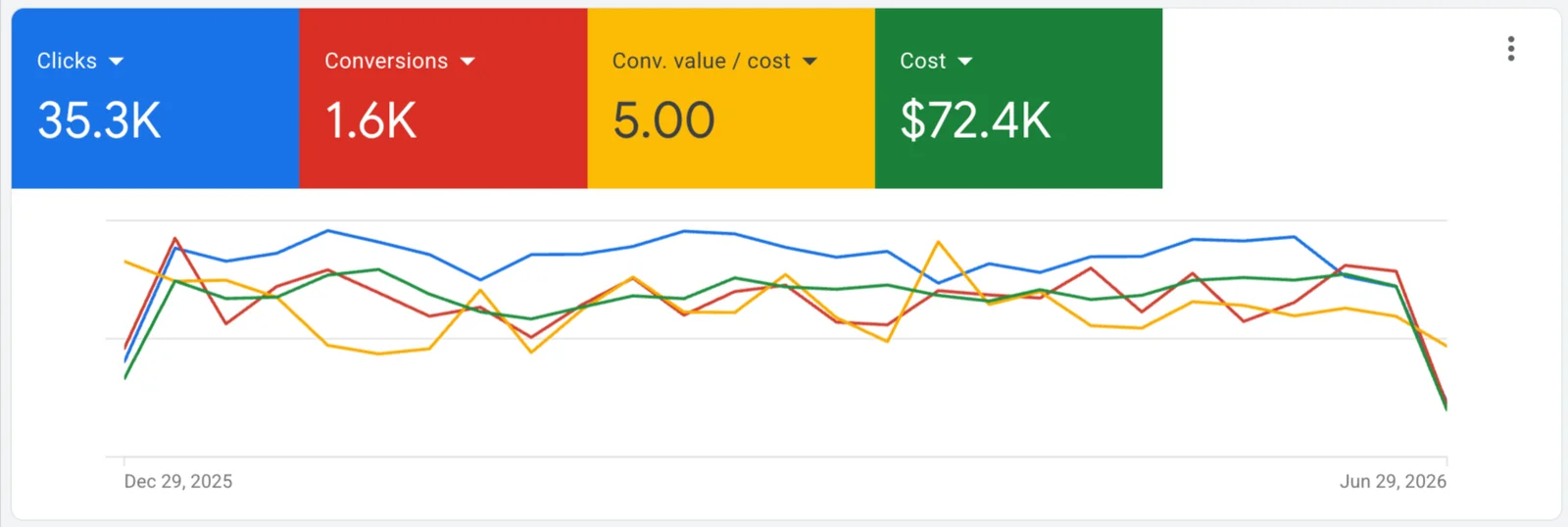
E-commerce stores with a working product and margin that can absorb paid traffic, usually from around $3,000 a month in ad spend. If you're asking “can we scale without killing the margin”, see the vinyl store (ROAS 4.33 at ~£60K/month) and the CPAP store (ROAS 5.0 held for six months).
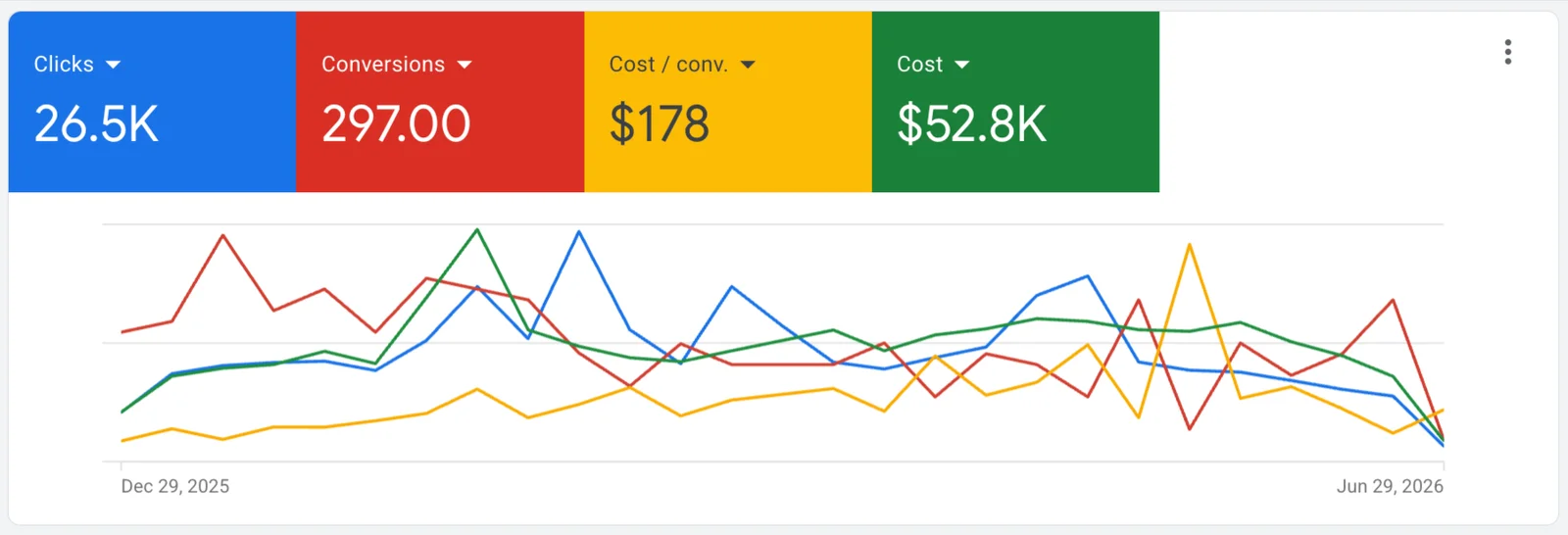
B2B and service businesses that need a steady flow of qualified enquiries: real estate, construction, home services, SaaS, professional services. See the home builder (~50 leads a month for six months) as an example.
It is probably not for you if you need results in a week with no tracking in place, or if the budget is under $1,000 a month: the account would not gather enough data to optimize against.
How the work goes
- Strategy call and audit (day 1–2). We go through your account if you have one, your funnel and your goals.
- Media plan and forecast (day 3–5). Budget, campaign types and what to expect from each, in numbers. You decide with the forecast in hand.
- Build and launch (day 5–7). Tracking goes in first, then campaigns.
- Optimization (weekly). Bids, search terms, audiences, products and creatives get tuned as data comes in.
- Reporting and scaling (monthly). A report built around leads or sales, cost per result and return, plus a live dashboard. We scale what works.
Working with an existing account
If you only want the review, it is a fixed $100 Google Ads audit: written findings ranked by money at stake, plus a call.
Most of my clients come with an account that already runs. I start with an audit: what's being tracked, where the budget actually goes, which campaigns and search terms pay and which only spend. One client's review of exactly that: “I asked him to audit my campaign structure to find leaking opportunities holding back our conversion rates. He responded fast and delivered comprehensively — went deep, no surface-level stuff.”
How I charge
A flat monthly fee based on scope and how many platforms we run. Never a percentage of ad spend, so my incentive is your result, not your budget. You know the number before anything starts. For most niches I recommend budgeting at least $1,000–1,500 a month in ad spend so the campaigns have enough data to optimize against.
Google Ads and Meta Ads together
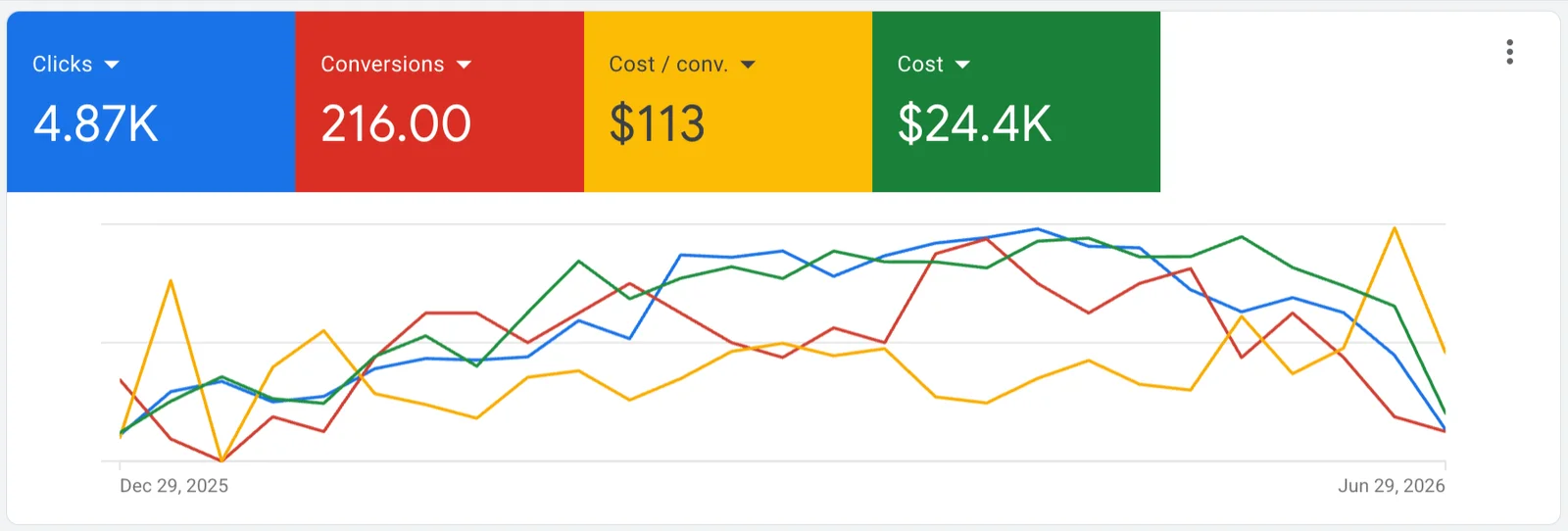
Many of my accounts run both. Google catches existing demand; Meta Ads builds it and brings people back. In the home builder case, Google delivered high-intent leads at $178 and Meta added earlier-stage leads at $27.49; together the builder had a predictable ~100 enquiries a month.