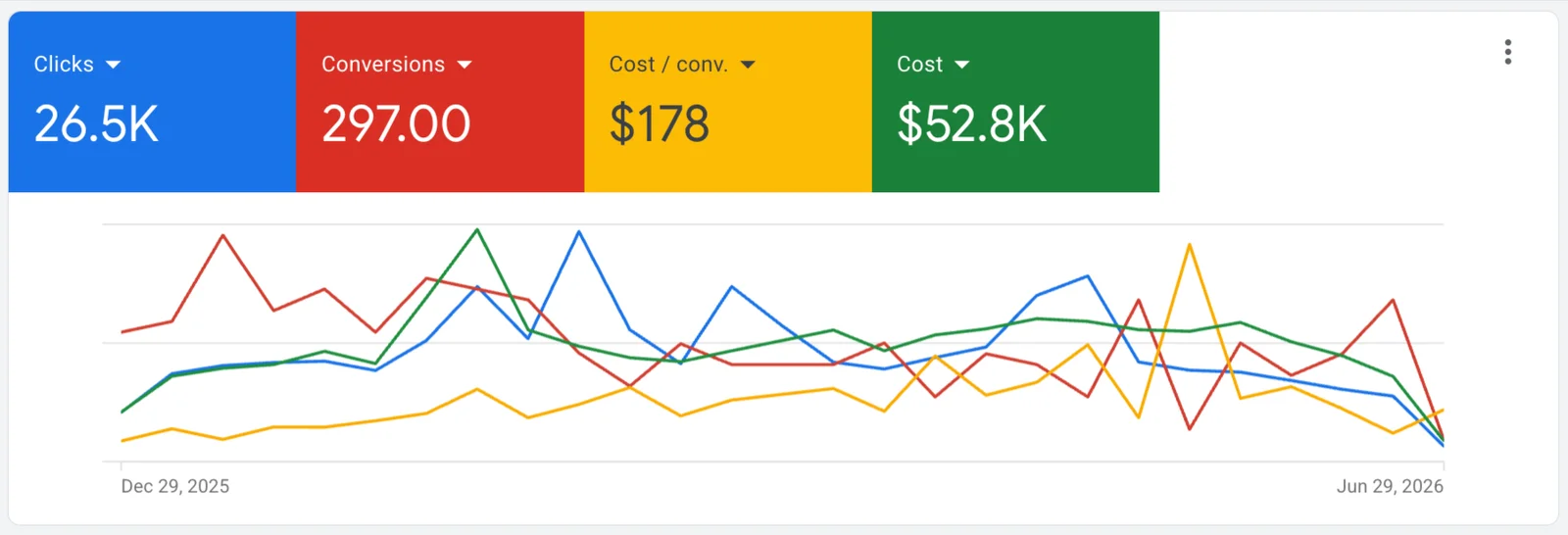
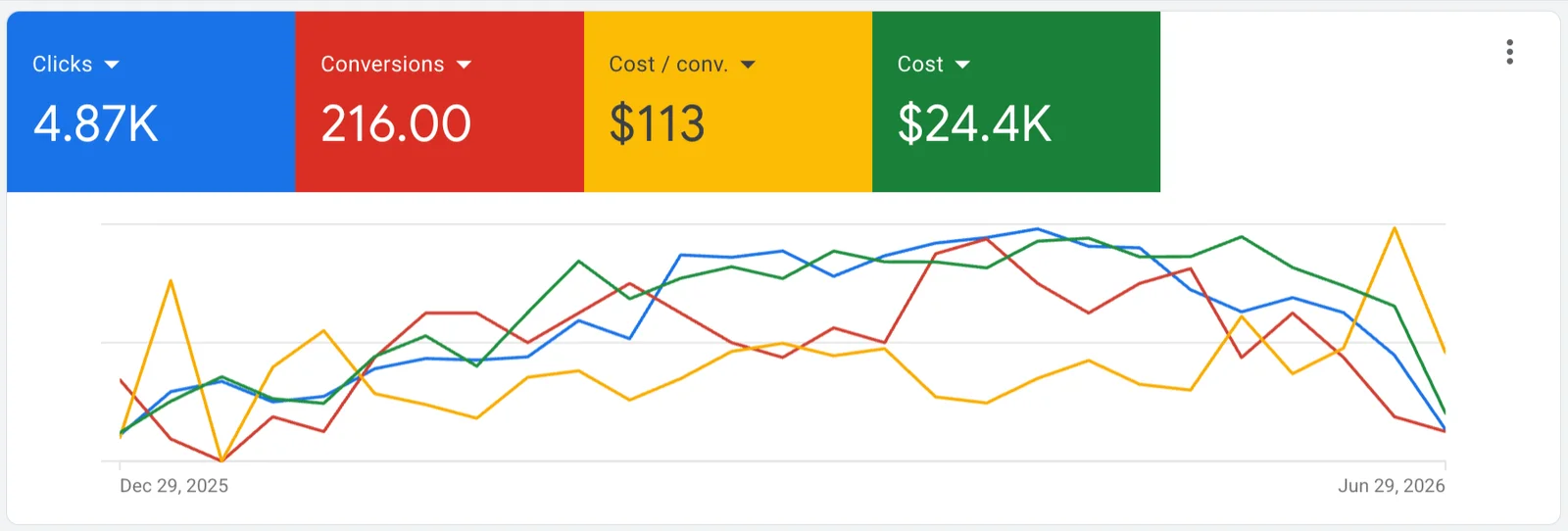
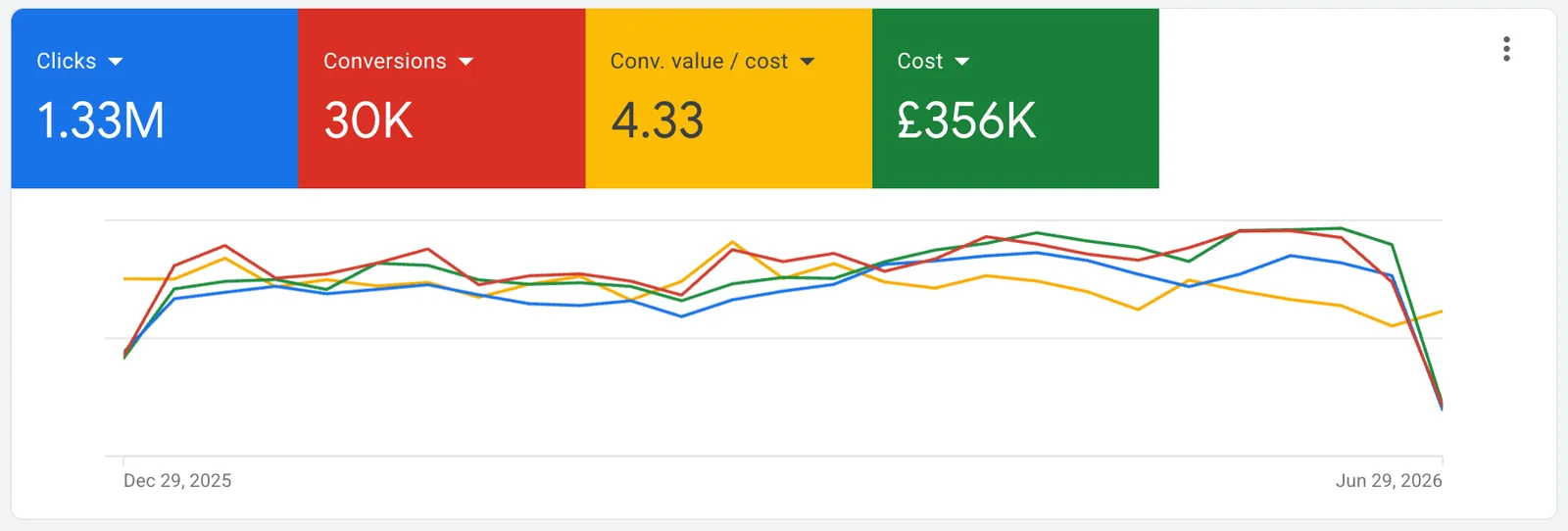
A Search campaign is a list of searches you are willing to pay for, a price you are willing to pay for each, and a page you send people to. Everything else is detail. The work is making sure all three match the business: the searches are the ones that lead to a sale, the price fits the margin, and the page answers the query.
Structure by intent and margin
One campaign with every keyword lets Google spend where conversions are easiest, which is usually your own brand name and the cheapest product. I separate brand from generic, high-intent from research queries, and services or categories by what a sale is worth, so each gets its own budget and its own target. That is how the home builder paid about $2 a click in a category where $5–10 is normal: tight to the local market and to buyer intent, nothing else.
Match types and negatives
Broad match is a budget killer in a fresh account and a useful tool in a mature one; the difference is whether tracking is verified and negatives exist. The search terms report, the list of real queries the money went to, gets read weekly, and the negatives list grows from it: DIY and “how to”, jobs, wholesale, neighbouring industries, areas outside the service radius. In the landscaping case, that discipline is half the reason 4.4% of clicks became quote requests.
Bidding matched to the data
Smart Bidding needs conversions to learn from. Target ROAS on fifteen conversions a month does not learn; Maximize Clicks on a lead-gen account buys clicks, not leads. The bidding strategy follows the conversion volume the campaign actually has, and changes as the account grows, in steps rather than jumps.
Landing pages matched to the query
Someone searching “water heater replacement” should land on the water heater page. Every extra click between the ad and the phone number costs real customers. Campaigns by service with their own landing page section is the single biggest conversion-rate lever in Search, and it is outside the ad account.
Where Search fits
Search captures demand that already exists; the ceiling is the search volume of your niche. For online stores it runs alongside Shopping and Performance Max; for lead generation it is usually the primary channel, with Meta Ads creating demand earlier in the decision and remarketing bringing people back. The full Google Ads scope is on the Google Ads page.