What makes event advertising different
You cannot optimize for six months and scale slowly. There is a date, ticket inventory, and a sales curve with a shape: an early-bird spike, a long quiet stretch, and most of the revenue in the last few weeks. The media plan has to mirror that: build awareness and an audience early while clicks are cheap, hold through the middle, and spend the largest share when intent peaks. After the event, the account goes to zero, and next year starts with whatever audiences and learnings were kept.
How the channels divide the work
- Meta Ads carry most consumer events. Video and photo creative that shows what it feels like to be there; audiences by location, interest and lookalikes of past buyers; then remarketing to everyone who engaged but did not buy as the date approaches. Ticket purchases are tracked through the ticketing platform, so the account optimizes toward sales, not clicks.
- Google Search catches people already looking: the event name, “[city] events [month]”, “things to do [weekend]”. Smaller volume, high intent, and essential for brand protection against resellers.
- YouTube and Display for reach in the final weeks when the audience is primed.
What the airshow needed
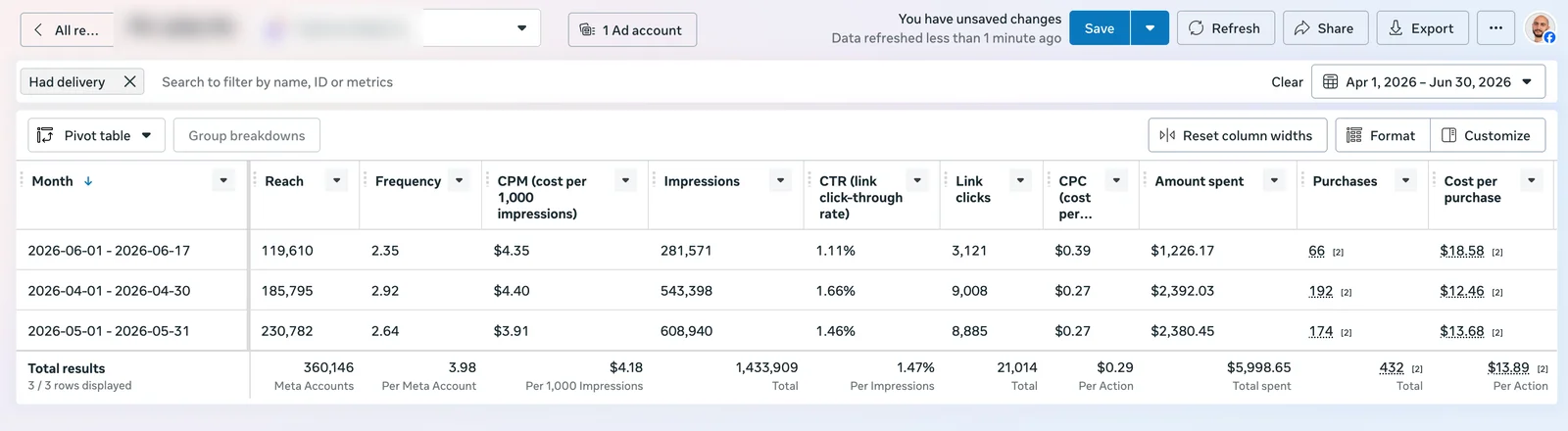
A major international airshow in Canada: a large audience, a defined region, and families deciding what to do on a specific weekend. The account was run on Meta with ticket sales as the conversion, creative built around the aircraft and the day out, and a budget paced to the sale window: 432 tracked ticket purchases at $13.89 each, roughly 5× return on ad spend, 360,000+ people reached in 90 days. The client's review: “Methodical, responsive, and explained the things I didn't understand (there were many!).” Full detail in the case study.
What goes wrong in most event accounts
- Spending evenly from launch to event day, so the budget is gone before the weeks when people actually buy.
- Optimizing for “engagement” or video views instead of ticket sales, because the ticketing platform was never connected. Tracking fixes this.
- No remarketing in the final weeks, when a reminder to the people who already looked is the cheapest sale in the account.
- Deleting everything after the event and starting from zero next year, instead of keeping buyer audiences for a warm launch.
Who I work with
Festivals, airshows, exhibitions, sports events, conferences and ticketed experiences with a defined region and a sales window of a few weeks to a few months. If your “event” is recurring or year-round, such as an attraction or a venue, the same logic applies with a steadier budget.